Miami site preparation demands machinery tailored to unique coastal geology and dense lot lines. Ground conditions across Miami-Dade County alternate between soft oolitic limestone, dense marl, and water-logged sand…
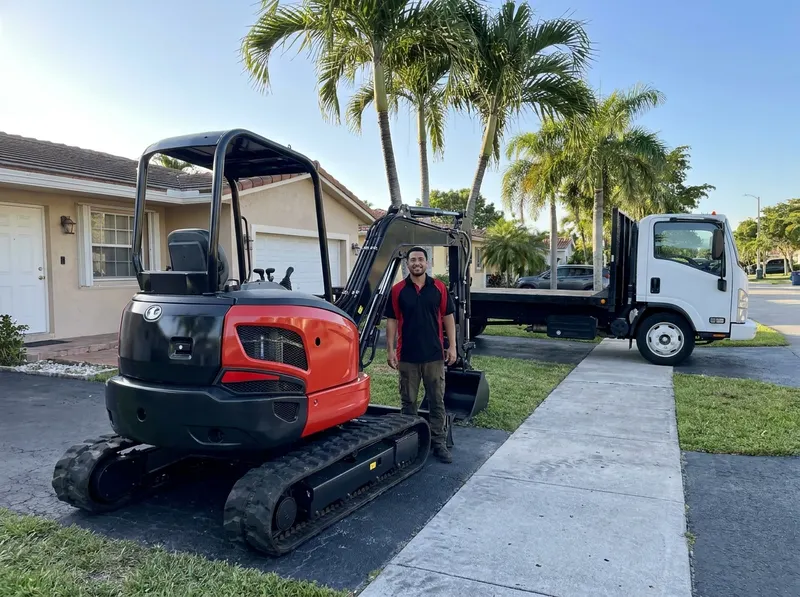
Miami site preparation demands machinery tailored to unique coastal geology and dense lot lines. Ground conditions across Miami-Dade County alternate between soft oolitic limestone, dense marl, and water-logged sand layers just 4 to 6 feet below the surface. Selecting earthmoving machinery requires balancing ground-bearing pressure against operating weight. In tight zero-lot-line residential parcels common to Coconut Grove, Little Havana, and Coral Way, standard full-sized backhoes risk structural cracking on adjacent decorative brick pavers and cannot maneuver past 8-foot side setbacks. For these spaces, a 3,500 to 6,000-pound mini excavator with retractable rubber tracks delivers the 7-to-9-foot dig depth required for plumbing laterals while maintaining low ground pressure to protect perimeter walls.
Larger infill commercial pads and staging yards across Wynwood, Allapattah, and the Design District frequently encounter hard coral caprock that halts standard wheeled tractors. Operating a rubber-track skid steer equipped with a 72-inch tooth bucket or an auxiliary hydraulic breaker attachment provides 74 horsepower of breakout force without tearing up the municipal asphalt access points on narrow neighborhood lanes. Rubber tracks spread machine weight across 4.2 pounds per square inch, which prevents ruts when operating through seasonal summer cloudbursts. Conversely, wheeled skid steers move 30% faster across packed roadbase but struggle in loose sand and risk heavy surface gouging on private driveways.
Logistical success depends on staging details and access clearance. Hauling flatbed trucks navigating tight urban streets near Edgewater, Brickell, or historic Overtown require clear curb space for trailer ramp extension. Standard drop-offs require 50 to 65 feet of straight-line clearance for tilt-bed trailers. To protect concrete slabs, paver approaches, and public sidewalks from track-bite and point-load fractures, operators must place heavy structural timber mats or composite outrigger pads along the unload apron prior to walk-off. Unlike dumpster services that haul trash off-site, an earthmoving equipment rental provides pure utility on-site: the customer supplies or arranges the certified machine operator, manages daily diesel refills, and adheres to 8-hour single-shift meter run limits per 24-hour billing cycle.
Every job gets a firm, written price after a free on-site visit.
Tell us about your earthmoving equipment rental job in Miami and we'll send a clear, written quote, usually the same day.
 Aspen Ridge Dumpster Rental